Use simple cleaning methods
Start with water, mild soap and a soft cloth or squeegee. Avoid abrasive pads, razor blades and harsh chemicals unless the product manufacturer specifically approves them.
Clean frames and tracks without forcing water into hidden cavities. Never fill or seal openings that may be part of the designed drainage system.
Glass
Use mild products and non-abrasive tools that will not scratch coatings or surfaces.
Tracks and drains
Remove loose debris while preserving intended water paths.
Hardware
Test movement and locks; use only compatible lubrication where recommended.
Perimeter
Watch for separated seals, staining and finish deterioration around the frame.
Check moving parts while cleaning
Operate every sash and lock. Look for loose handles, frayed balances, damaged weatherstripping and screens that no longer sit properly.
Use only manufacturer-recommended lubricants and apply them sparingly. Heavy oils can collect dirt and may damage some plastics or finishes.

Inspect the perimeter from a safe position
Look for separated caulking, cracked finishes and staining around the opening. Upper-floor exterior work should be left to someone with appropriate access and equipment.
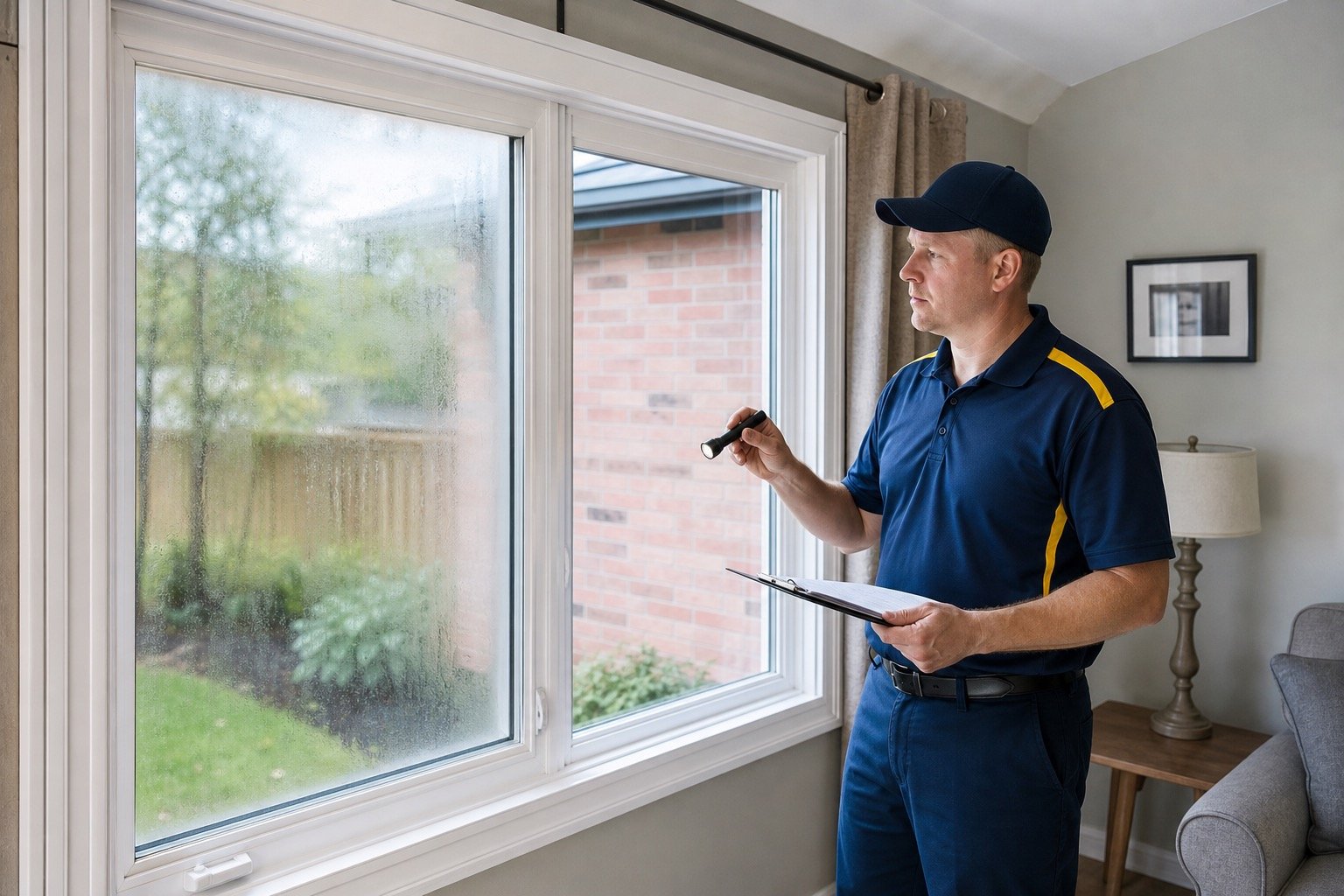
Interior condensation, fogging between panes and active water entry are different conditions. Record where and when they appear rather than covering the symptom with new sealant.
Details that make a repair request more useful
- Are cleaners compatible with the glass coating?
- Do all sashes and locks work smoothly?
- Are drainage openings clear?
- Has any moisture or staining changed since last season?
