Between the panes
Fog, haze or droplets inside the sealed cavity commonly indicate that the edge seal has lost its integrity. The surfaces cannot be wiped from the room.
Moisture trapped between panes often points to a failed insulated glass seal. If the sash and frame remain suitable, replacing the glass unit may solve the problem without replacing the complete window.

An insulated glass unit—often shortened to IGU or called a sealed unit—uses multiple panes separated by a spacer around the perimeter. The enclosed space is kept apart from normal indoor and outdoor air.
The glass makeup may include a low-emissivity coating, gas fill, safety glass or other project-specific options. These details are part of the unit itself; the surrounding sash, frame, hardware and installation are separate parts of the window.
This distinction matters during repair. Cloudy glass does not automatically mean every part of the window has failed, but a clear pane does not prove the frame and installation are in good condition either.
The location and timing of moisture provide useful clues. An assessment is still needed when the cause is uncertain.
Fog, haze or droplets inside the sealed cavity commonly indicate that the edge seal has lost its integrity. The surfaces cannot be wiped from the room.
Interior condensation relates to glass temperature, indoor humidity and airflow. It may occur even when the insulated glass seal is intact.
Temporary outdoor condensation can form when the outer pane becomes cooler than humid exterior air. It is not, by itself, proof of failure.
The best scope depends on whether the existing components can continue to perform safely and reliably.
A made-to-measure sealed unit can often be installed into a serviceable sash or frame when the main problem is failed or damaged glass.
Full replacement may make more sense when deterioration, recurring water problems, poor operation or an unsuitable frame extends beyond the glass.
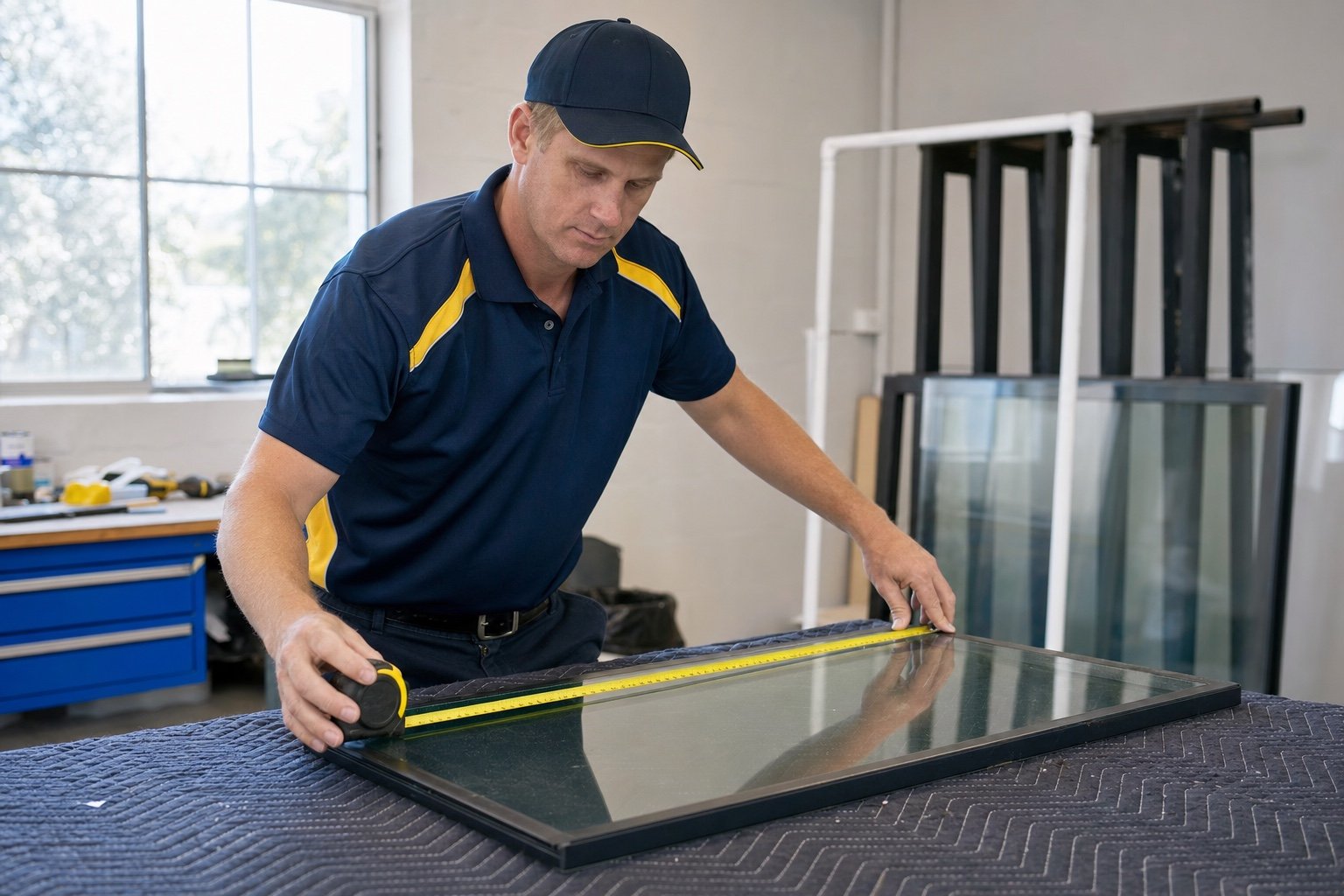
Replacement units are ordered to suit the window. Thickness, overall dimensions, spacer, pane type, coating location, tint and safety requirements may all matter.
Glass in doors, beside doors, close to floors or in other hazardous locations may need to meet safety-glazing requirements. Larger panes and specialty applications can have their own design constraints.
Windows Hamilton confirms the accessible details before ordering. Photos can help with initial triage, but they do not replace final measurement and inspection.
Include the entire window and a closer image of the fogging, crack or affected edge rather than only a tight crop of the glass.
Count separate panes or window sections. A wide combination window may contain several individual sealed units.
Tell us whether it is fixed, casement, awning, hung or sliding and whether locks, cranks or sashes currently work.
Note staining, softness, swelling, loose trim or leakage during rain. These signs can change the recommended scope.
Send Windows Hamilton photos of the full window, the affected glass and any labels or markings you can find. We will help determine whether the request should begin as insulated-glass replacement, window repair or complete replacement—without treating every cloudy pane as the same project.
Talk with our team: Call Windows Hamilton at 289-975-4020.
Windows Hamilton ©2026 — Windows, doors, installation and repair for Hamilton-area homes.
Choose residential or commercial, then provide the few details we need to understand the request.