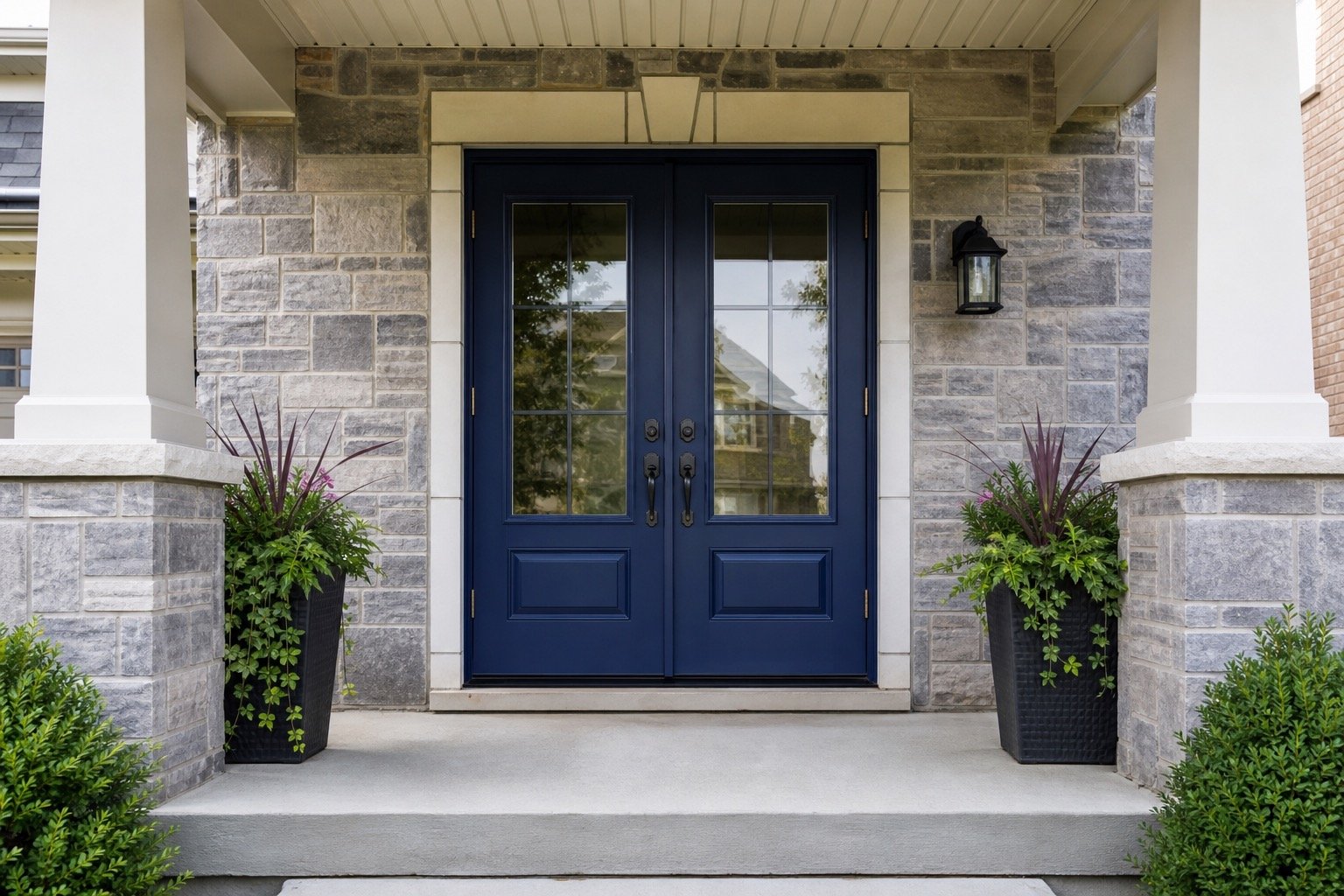
Begin with the opening and the household
Measure more than the slab. Frame condition, landing, swing clearance, floor height and exterior overhang all affect the recommendation.
Consider how groceries, children, pets and mobility needs move through the entrance. A beautiful handle or large glass insert is less useful if it makes everyday access awkward.
Daily traffic
Choose swing, width, threshold and hardware around how the entrance is actually used.
Exposure
Sun, wind, rain, snow and overhang protection affect materials and finishing.
Glass
Coordinate daylight, privacy, safety and lock-side visibility.
Installation
Frame, sill, perimeter seals and trim determine whether the complete entrance performs.
Balance light, privacy and security
Door glass and sidelights can brighten a dark hall, but the view from the street and the lock-side relationship need attention. Privacy glass, internal patterns and panel placement create different results.
Ask what type of safety glass is used and how the glass is retained. Decorative appearance should not replace a clear discussion of construction and security.

Treat installation as part of the door
A new slab in a distorted frame may still stick or leak. Prehung replacement can address the frame and seals, but surrounding sill, masonry, siding and interior trim may expand the scope.
Confirm removal, threshold work, perimeter sealing and finishing in writing. The door should be tested for even reveal, smooth swing, latch engagement and weather-seal compression.
Plan the complete entrance
- Which direction should the door swing?
- How protected is the entrance from weather?
- How much privacy and daylight are needed?
- What frame and finishing work is included?