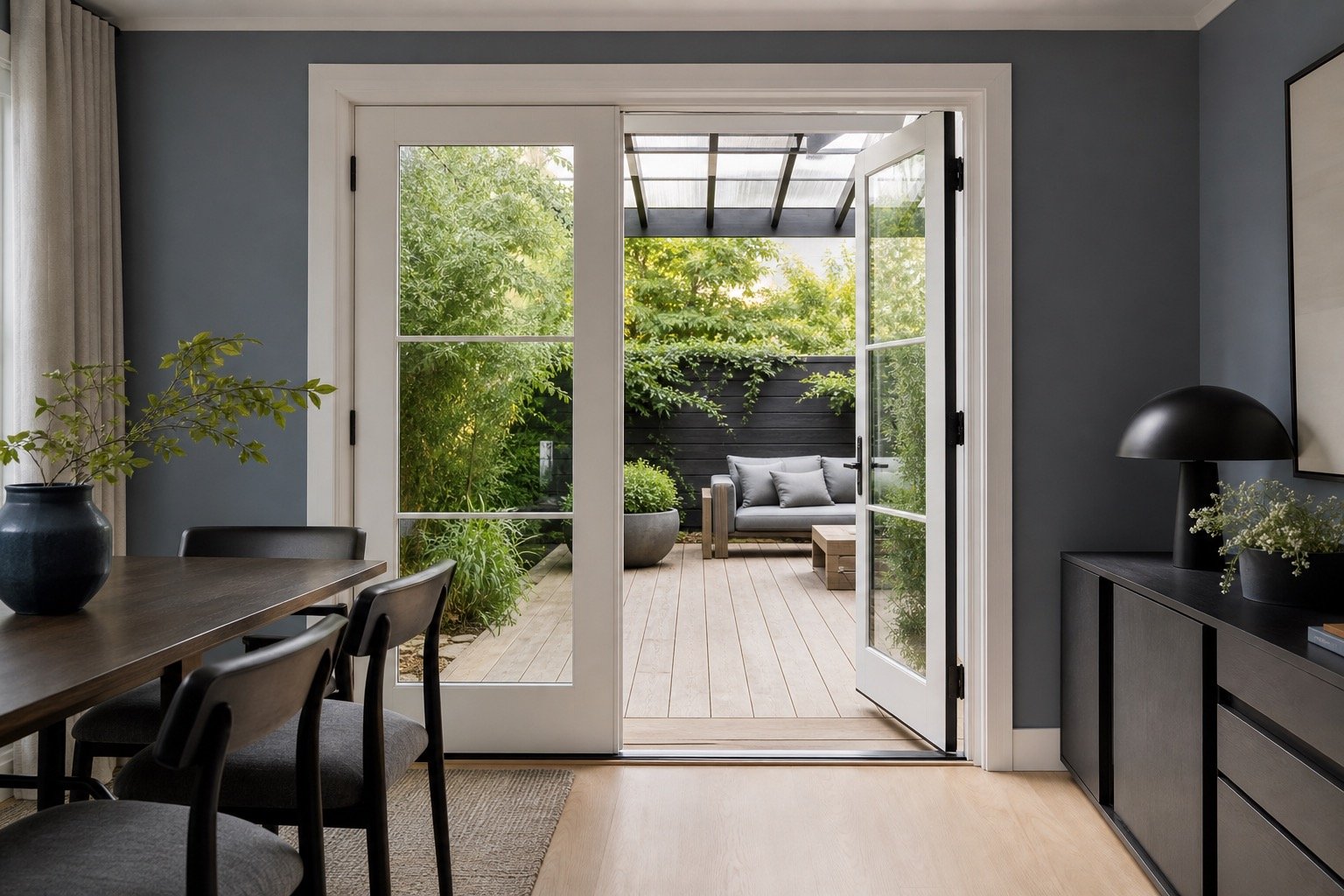
Hinged doors need a swing zone
The active garden-door leaf may swing inward or outward depending on the system and project conditions. Furniture, snow, exterior railings and wind can make one direction impractical.
A second leaf may be fixed for daily use and released when wider access is needed. Confirm the hardware and threshold operation rather than assuming both leaves behave identically.
Garden doors
Hinged operation and traditional appearance, with swing clearance as the key constraint.
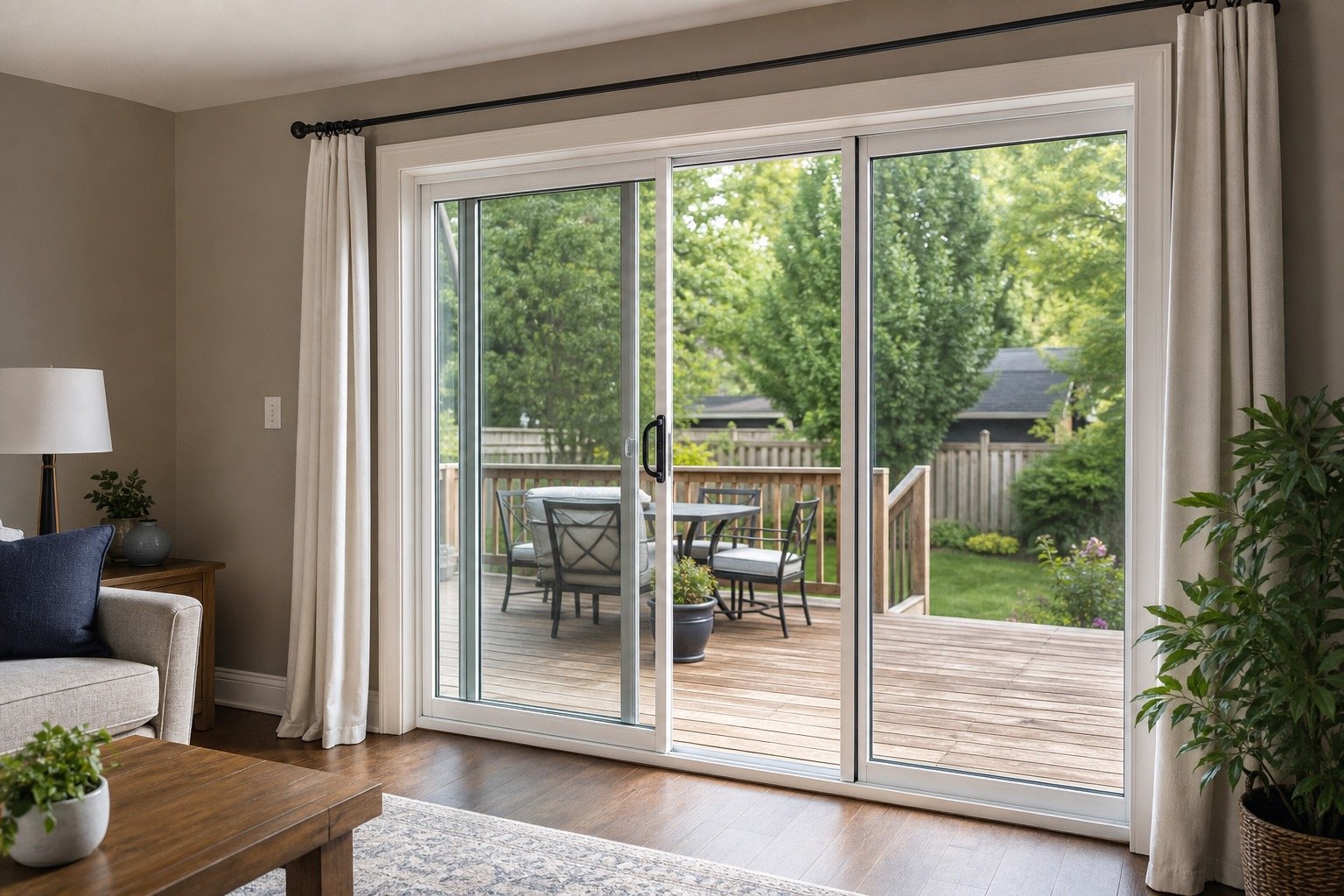
Patio sliders
Sideways movement preserves nearby space and uses a track and rolling screen.
Companion leaf
May provide occasional wider access on a hinged pair without acting as the daily door.
Sill and landing
Floor height, drainage and exterior clearance affect either system.
Sliders preserve adjacent space
A patio slider moves parallel to the wall and can suit dining rooms, kitchens and decks where swing space is limited. The active panel and screen still need a clear traffic path.
Wide glass area can support views, but frame divisions, screen mesh and handle placement affect the finished sightline.

Performance depends on details
Both systems rely on level sills, weather seals and correct perimeter integration. Sliders add rollers and tracks; hinged doors add hinges, latches and meeting-stile alignment.
Compare maintenance, accessibility and winter use with the household. A beautiful configuration is only successful if it closes, locks and drains reliably.
Compare these conditions at the opening
- Where can a hinged leaf swing?
- How much clear opening is needed?
- Is a retractable or sliding screen preferred?
- What winter exposure reaches the sill?