The visual benefit comes from less metal
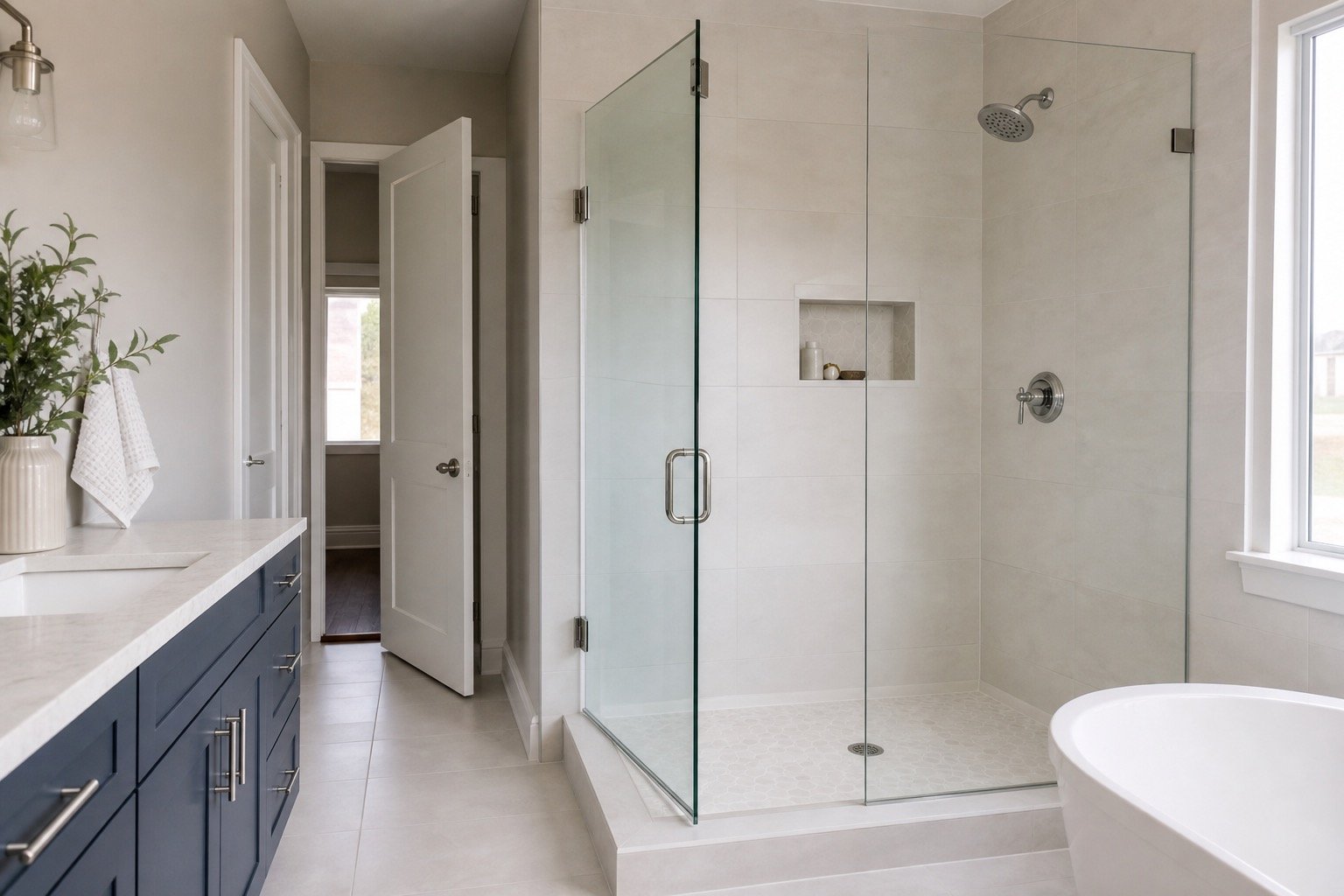
Clear glass and discreet hardware keep sightlines open and let tile remain the main finish. Low-iron glass may reduce the green cast in some applications, especially beside pale tile.
Less framing does not mean no structure. Hinges, clamps, channels and wall support must be coordinated for the panel sizes and door movement.
Open sightlines
Reduced framing keeps tile, fixtures and room proportions visually clear.
Project-specific hardware
Hinges and clamps rely on suitable wall support and accurate glass preparation.
Daily care
Accessible glass is straightforward to squeegee, but spotting and joints still need cleaning.
Water planning
Slope, spray direction, gaps and door movement determine how well the enclosure contains water.
Cleaning changes rather than disappears
Broad glass surfaces are easy to reach with a squeegee, but water spotting and soap residue remain visible. Hardware edges and silicone joints still need routine care.
Coatings may make maintenance easier but do not eliminate cleaning. Water quality, ventilation and daily habits affect the result.
Water control begins with the bathroom layout
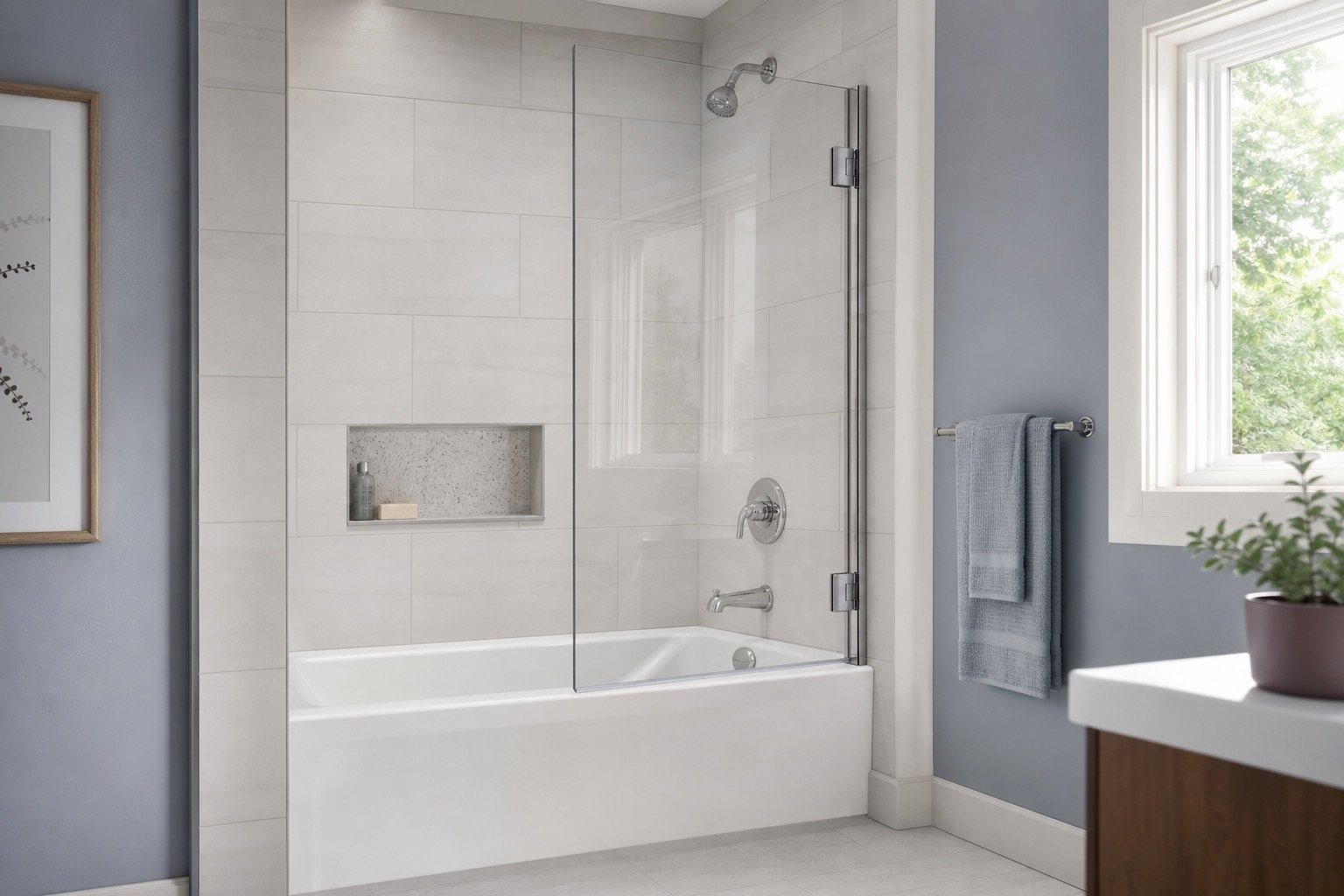
Curb slope, floor pitch, showerhead direction, door gap and fixed-panel location all influence escape. Glass cannot correct a flat curb or poorly directed spray.
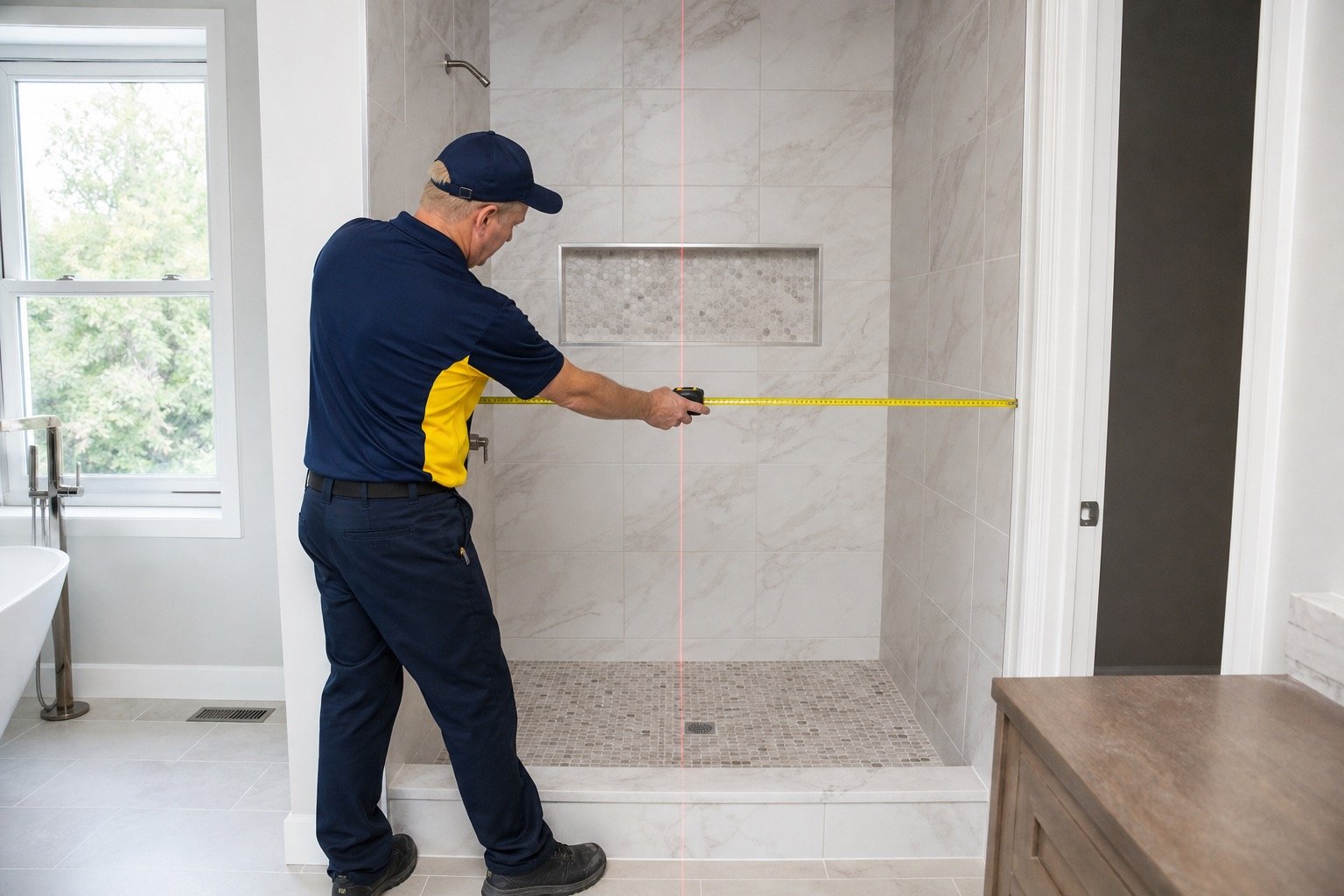
Walls, benches and half walls should be complete and stable before final measurement. Custom glass follows the finished opening; it should not be used to hide unfinished geometry.
Bring these questions into the design
- Are walls and curbs fully finished?
- Where is structural support for hinges?
- Which direction will the door swing?
- How will spray and floor slope direct water?